
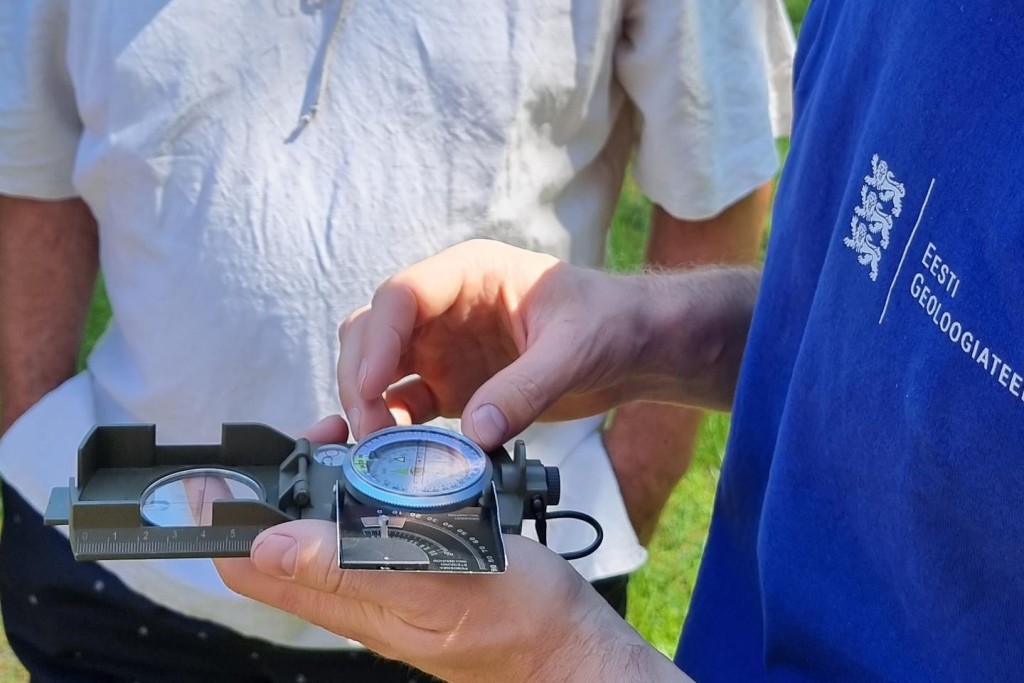
The aim of the three-year project managed by the Geological Survey of Estonia is to investigate the potential for geothermal energy at various locations in Estonia and to construct two geothermal energy test stations.
According to the Minister of Economic Affairs and Infrastructure Taavi Aas, geothermal energy has been somewhat overshadowed by other forms of renewable energy in Estonia; however, he believes that it is essential to explore its potential. “The greater our insight into the possibilities of renewable energy production, the better the decisions we can make in energy production for it to be both environmentally friendly, as affordable as possible, and sustainable,” the minister claimed. “According to initial estimates, the potential for geothermal energy in Northern Estonia is good – the thermogeological properties there are at least as good as in Southern Finland where a number of cost-effective geothermal energy heat plants operate,” Aas explained.
Geothermal energy is the solar energy stored in the ground and the energy stored deep inside the earth’s crust. The low-temperature geothermal energy customarily used in Estonia is obtained from about one metre below the ground by means of a heat pump. The potential for medium- and high-temperature geothermal energy stored in the earth’s crust at depths over 500 metres has not been further explored in Estonia, but in Finland and Sweden, for instance, it is widely implemented in the production of thermal energy and electricity. The project will reveal whether geothermal energy is a technically suitable and cost-effective energy solution for heating, cooling and energy storage in Estonia.
According to the Director of the Geological Survey of Estonia Sirli Sipp Kulli, the primary objective of the project is to demonstrate that different geothermal energy applications may be economically viable in the geological conditions of Estonia. “As part of the project we will investigate the usability of geothermal energy applications in Northern Estonia, as well as the use potential of mine water and seawater thermal energy applications. In the second phase of the project, we will examine the feasibility of constructing new test stations and introduce experimental geothermal energy plants,” she clarified.
Sirli Sipp Kulli believes that it is also important to prepare a strategy and action plan for the research and development of geothermal energy, and to raise awareness of the possibilities of this energy source. “We hope that the efficiency of the forthcoming test stations will encourage Estonian construction and real estate enterprises to make greater use of geothermal energy,” Kulli added. “This year’s hot summer has shown us that the potential of geothermal energy may well become increasingly important not only in heat production but also in cooling buildings.”
Energy efficiency in buildings is a topical issue in all of Europe. Buildings account for nearly 40% of energy consumption in the European Union. It is therefore essential to increase the share of nearly zero-energy buildings and to create financing schemes for energy efficiency in buildings. Geothermal energy has been highlighted in the EU as an environmentally friendly form of renewable energy which is also more than twice as efficient as conventional air source heat pumps. According to various estimates, geothermal heat pumps could cut heating costs by 30–60% and cooling costs by 20–50% compared to conventional heating and cooling systems.
The research project will run until the end of 2024, the budget of the project is 3.8 million euros, and it is financed from the funds derived from the sale of greenhouse gas emission quotas.
Additional information:
Aivar Auväärt
Geothermal Energy Project Manager
Geological Survey of Estonia
[email protected]
Phone: 521 3831

